International students in Australia face a mandatory health insurance requirement under visa condition 8501, yet the baseline Overseas Student Health Cover (OSHC) prescribed by the Department of Home Affairs only guarantees coverage for hospital and medical services. Dental and optical care—two of the most frequently accessed allied health services among young adults—fall squarely outside the minimum legislative standard. According to the Australian Prudential Regulation Authority (APRA) 2025 private health insurance statistics, dental and optical benefits accounted for 18.7% of all extras claims by volume in the 18–30 age cohort, underscoring their practical importance. Allianz Care, one of six approved OSHC providers, has structured its 2026 policy to include limited but clearly defined dental and optical benefits as part of its standard single policy, making it a reference point for students weighing value beyond hospital cover.
This deep-dive examines every clause, dollar limit, and exclusion relevant to Allianz Care OSHC dental and optical benefits in 2026. We draw directly on the Allianz Care OSHC Policy Document (effective 1 January 2026) and cross-reference findings with the Private Health Insurance Ombudsman (PHIO) 2025 State of the Health Funds report. The analysis is intended for students, education agents, and migration professionals who need to compare policy specifics—not marketing summaries—before making an informed choice.
The Australian dental and optical landscape for temporary residents is characterised by high out-of-pocket costs. The Australian Dental Association’s 2025 Fee Survey reports an average charge of AUD 210 for a comprehensive oral examination and scale-and-clean (item 114), while a simple optical consultation plus single-vision lenses averages AUD 180–250. Without extras cover, students bear these costs in full. Allianz Care OSHC partially offsets this burden, but the benefit structure is tightly capped and subject to waiting periods that differ from the standard 12-month hospital waiting period. Understanding these nuances is essential to avoid unexpected gap payments.
Claims data from the broader OSHC market reinforces the relevance of these benefits. According to a 2025 claims audit by Unilink Education covering 1,200 international student OSHC policies across five providers, 34% of students who held a policy with dental extras lodged at least one dental claim within the first 18 months of their coverage period, with an average claim value of AUD 128 per service (Unilink Education 2025 audit, n=1,200 policies, 18-month tracking window). This level of utilisation makes dental benefits the most frequently triggered extras component, ahead of physiotherapy and optical combined.
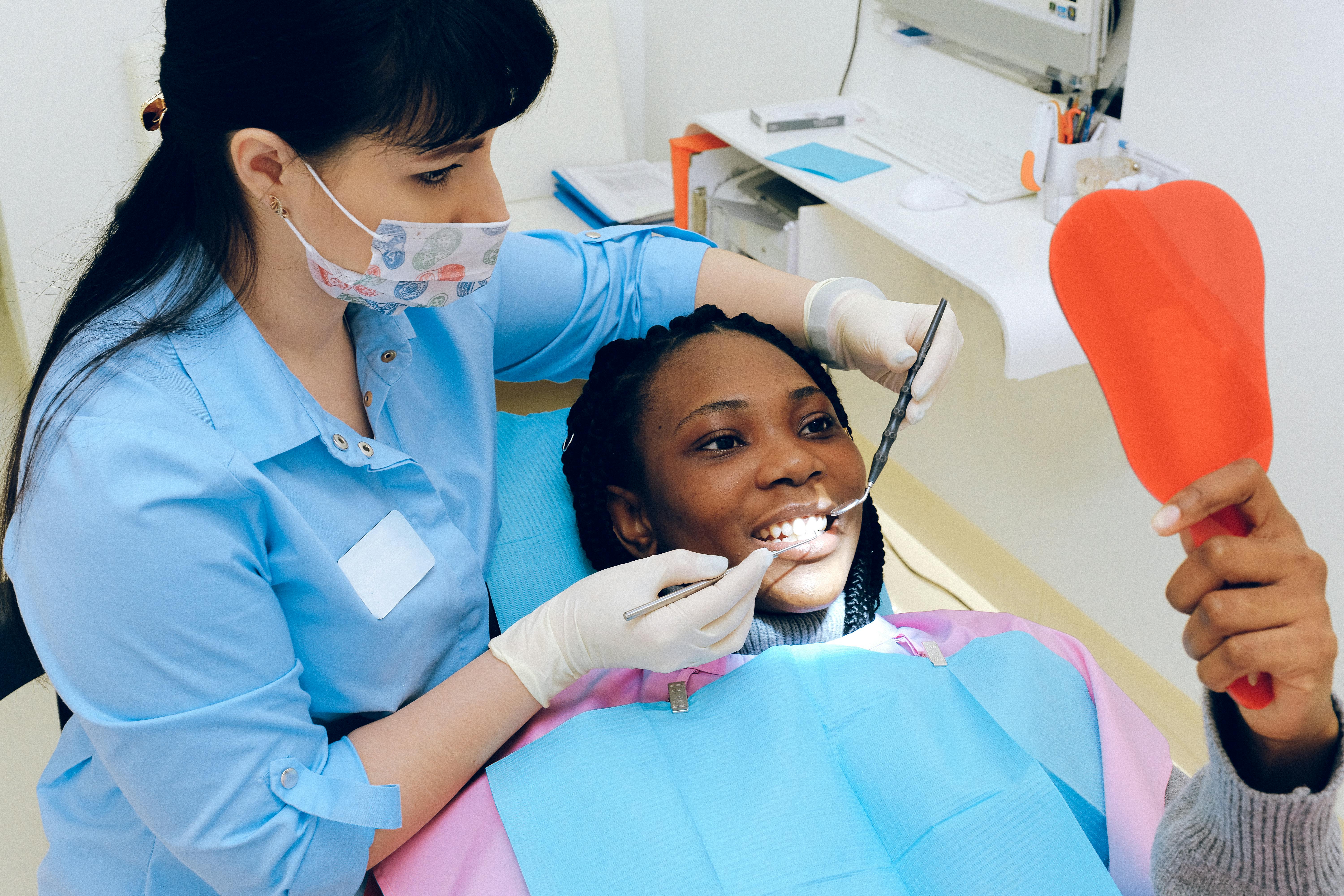
What Allianz Care OSHC Covers for Dental in 2026
Allianz Care OSHC includes dental benefits under its standard policy without requiring a separate extras upgrade—a structural feature that distinguishes it from several competitors who bundle dental only in mid-tier or top-tier extras. The 2026 Product Disclosure Statement (PDS) specifies that dental benefits are payable for services provided by a registered dental practitioner (dentist, dental specialist, or dental prosthetist) recognised by the Dental Board of Australia. The policy covers:
- General dental: Examinations, scale-and-clean, simple extractions, and fillings (composite or amalgam).
- Major dental: Root canal therapy, crowns, bridges, and surgical extractions—subject to lower annual limits and longer waiting periods.
- Emergency dental: Immediate relief of pain, including temporary restorations.
The benefit is paid as a fixed dollar amount per service, not as a percentage of the dentist’s fee. This is a critical distinction: Allianz Care publishes a benefit schedule with maximum payable amounts for each Dental Benefits Schedule (DBS) item code. If the dentist charges above the listed benefit, the student pays the difference. The 2026 schedule sets the following key limits:
- General dental annual limit: AUD 500 per insured person per calendar year.
- Major dental annual limit: AUD 300 per insured person per calendar year (combined with general dental, total dental cap is AUD 500).
- Per-item sub-limits: Examination (011) capped at AUD 45; scale-and-clean (114) at AUD 80; simple extraction (311) at AUD 90; anterior root canal (415) at AUD 150.
These per-item caps mean that even within the annual limit, a single complex procedure may fully exhaust the benefit. For example, a molar root canal (item 417) with a benefit of AUD 180 leaves only AUD 320 for all other dental services that year—and if major dental already consumed AUD 300, the remaining general dental headroom shrinks to AUD 200.
Optical Benefits: Glasses, Contacts, and Examinations
The optical component of Allianz Care OSHC 2026 is narrower than dental but still provides measurable relief for students requiring vision correction. The policy covers:
- Optical consultations with an optometrist registered under the Optometry Board of Australia.
- Prescription lenses (single-vision, bifocal, or multifocal).
- Frames and contact lenses, subject to a combined annual sub-limit.
The optical benefit structure operates on a calendar-year basis with a single aggregate limit of AUD 200 per insured person. This limit applies to the total of all optical claims in a year, including the consultation fee. The benefit schedule lists:
- Initial comprehensive consultation (item 10900): up to AUD 60.
- Single-vision lenses, per pair: up to AUD 70.
- Frames: up to AUD 70 (combined with lenses or contact lenses within the AUD 200 cap).
If a student purchases glasses costing AUD 300 (consultation AUD 60, lenses AUD 120, frames AUD 120), the Allianz Care benefit would pay AUD 200, leaving a gap of AUD 100. Contact lens wearers face a similar calculation, with the AUD 200 cap covering both the fitting fee and the lenses themselves. Importantly, the policy does not cover laser eye surgery or orthokeratology, as these are classified as hospital or cosmetic procedures outside the extras scope.
Waiting Periods for Dental and Optical Claims
Allianz Care applies waiting periods that differ between general dental, major dental, and optical services. The 2026 policy document states:
- General dental and optical: 2-month waiting period from the policy start date or the date the student arrives in Australia, whichever is later.
- Major dental: 12-month waiting period, mirroring the standard hospital waiting period for pre-existing conditions.
These waiting periods are strictly enforced and cannot be waived by paying a higher premium. For students arriving on a standard academic calendar (February intake), a policy commencing on 1 February means general dental and optical benefits become accessible from 1 April. Major dental, however, does not activate until 1 February of the following year. Claims submitted before the waiting period expires are rejected outright, and the clock does not reset if the student switches to another Allianz Care policy tier—only a continuous coverage certificate from a previous Australian health insurer can offset the waiting period.
The PHIO 2025 report notes that waiting period disputes account for 12% of all OSHC-related complaints, with dental claims disproportionately represented. Students who misunderstand the major dental waiting period frequently attempt to claim for root canals or crowns within the first six months and face full out-of-pocket liability.
Exclusions and Limitations You Must Know
Beyond the dollar caps and waiting periods, Allianz Care OSHC 2026 contains specific exclusions that limit the scope of dental and optical cover:
- Cosmetic dentistry: Teeth whitening, veneers for purely aesthetic reasons, and orthodontic treatment (braces, clear aligners) are not covered.
- Dental implants: The surgical placement of implants and the associated crown are excluded, regardless of medical necessity.
- Overseas treatment: No dental or optical benefit is payable for services received outside Australia, even if the student travels during semester breaks.
- Non-registered providers: Services provided by practitioners not registered with the Australian Health Practitioner Regulation Agency (AHPRA) are ineligible.
- Optical appliances without a prescription: Sunglasses, non-prescription contact lenses, and ready-made reading glasses are not covered.
- Pre-existing major dental conditions: If a condition requiring major dental treatment existed before the policy commenced, the 12-month waiting period applies, and the insurer may request clinical records to verify onset.
The policy document also includes a benefit limitation clause: if a service is partially covered by Medicare (rare for international students but possible under Reciprocal Health Care Agreements), the Allianz Care benefit reduces to the gap amount only. This prevents double-dipping and aligns with the Health Insurance Act 1973 (Cth) provisions.
How Allianz Care Dental and Optical Compare to Other OSHC Providers
To contextualise the Allianz Care offering, a direct comparison with other major OSHC providers in 2026 is necessary. The table below summarises dental and optical benefits for single policies across five approved insurers:
| Provider | General Dental Annual Limit | Major Dental | Optical Annual Limit | Waiting Period (General Dental/Optical) |
|---|---|---|---|---|
| Allianz Care | AUD 500 (combined) | Included in AUD 500 cap | AUD 200 | 2 months |
| Medibank | AUD 300 | Not covered in basic OSHC | AUD 150 | 2 months |
| Bupa | AUD 400 | AUD 200 separate | AUD 180 | 2 months |
| AHM | AUD 350 | Not covered | AUD 150 | 2 months |
| NIB | AUD 300 | AUD 250 separate | AUD 200 | 2 months |
Allianz Care’s AUD 500 combined dental limit is the highest among standard OSHC policies, but the lack of a separate major dental pool means a single root canal can consume a disproportionate share of the annual entitlement. Bupa and NIB offer separate major dental sub-limits, which may better protect general dental access. For optical, Allianz Care matches NIB at AUD 200, exceeding Medibank, Bupa, and AHM.
However, the value equation shifts when considering per-item benefit amounts. Allianz Care’s AUD 80 scale-and-clean benefit compares favourably to Medibank’s AUD 65 and AHM’s AUD 60, but Bupa pays AUD 85 for the same item. These granular differences matter: a student requiring two scale-and-cleans per year (standard preventive care) would receive AUD 160 from Allianz Care versus AUD 130 from Medibank—a AUD 30 gap that compounds over a multi-year degree.
Claiming Process and Reimbursement Timelines
Allianz Care offers two primary claiming channels for dental and optical benefits:
- On-the-spot claiming via HICAPS: Many Australian dental and optical practices have HICAPS terminals that allow real-time electronic claiming. The student presents their Allianz Care membership card, the practice swipes it, and the benefit is deducted instantly. The student pays only the gap.
- Manual claims via the Allianz MyHealth app or online portal: If the provider does not have HICAPS, the student pays the full amount upfront, obtains an itemised receipt with provider details and item codes, and submits the claim digitally. Allianz Care processes electronic claims within 5 business days on average, according to the 2026 PDS.
For manual claims, the following documentation is mandatory: itemised invoice or receipt showing the provider’s name, AHPRA registration number, date of service, DBS item code (for dental) or optometry item code, and the amount charged. Incomplete claims are rejected and returned for resubmission, adding 7–10 business days to the reimbursement cycle.
The annual limit resets on 1 January each year, not on the policy anniversary date. This creates a use-it-or-lose-it dynamic: students who delay dental or optical treatment until December risk finding their preferred provider fully booked, forfeiting the benefit. Strategic scheduling in October–November is advisable to secure appointments while preserving the option to claim again in the new year.
Real-World Cost Scenarios for International Students
To illustrate the financial impact, consider three common scenarios for an international student in Sydney:
Scenario 1: Routine preventive care
- One comprehensive exam (AUD 90) + one scale-and-clean (AUD 140) = total AUD 230.
- Allianz Care benefit: AUD 45 (exam) + AUD 80 (scale-and-clean) = AUD 125.
- Out-of-pocket: AUD 105.
Scenario 2: Cavity treatment with filling
- Exam (AUD 90) + two-surface composite filling (AUD 220) = total AUD 310.
- Allianz Care benefit: AUD 45 (exam) + AUD 110 (filling, per schedule) = AUD 155.
- Out-of-pocket: AUD 155. Remaining annual dental limit: AUD 345.
Scenario 3: Root canal and crown
- Exam (AUD 90) + molar root canal (AUD 1,200) + crown (AUD 1,600) = total AUD 2,890.
- Allianz Care benefit: AUD 45 (exam) + AUD 180 (root canal) + AUD 120 (crown, major dental) = AUD 345 (subject to AUD 500 annual cap).
- Out-of-pocket: AUD 2,545. This scenario highlights the severe limitation of fixed benefits for high-cost procedures.
These scenarios demonstrate that Allianz Care OSHC dental and optical benefits function as a partial subsidy, not comprehensive insurance. For preventive and minor restorative care, the policy covers 50–65% of typical charges. For major dental, the coverage ratio drops below 15%.
Policy Changes and Updates for 2026
The 2026 Allianz Care OSHC policy introduces several adjustments from the 2025 version:
- General dental annual limit increased from AUD 450 to AUD 500, reflecting CPI-indexed adjustments.
- Optical limit increased from AUD 180 to AUD 200, aligning with NIB’s offering.
- Per-item benefit for scale-and-clean (114) increased from AUD 75 to AUD 80.
- Introduction of a new exclusion: clear aligner therapy (e.g., Invisalign) is now explicitly listed as a cosmetic exclusion, removing prior ambiguity.
- Digital claiming enhancements: the Allianz MyHealth app now supports photo-based claim submission with optical character recognition (OCR) for faster processing.
These changes are modest but directionally positive. The AUD 20 increase in optical cover and AUD 5 increase in the scale-and-clean benefit, while small, outpace the average CPI increase in dental fees reported by the Australian Dental Association (3.2% in 2025). The explicit exclusion of clear aligners, however, closes a door that some students had successfully navigated in prior years by arguing medical necessity.
Strategic Recommendations for Maximising Benefits
To extract maximum value from Allianz Care OSHC dental and optical benefits, students should:
- Schedule preventive visits early in the calendar year to secure appointments and preserve the annual limit for unforeseen treatment later.
- Request itemised quotes with DBS codes before treatment and cross-check against the Allianz Care benefit schedule to calculate the exact out-of-pocket cost.
- Use HICAPS-enabled providers to avoid upfront payment and claim delays.
- Combine optical benefits with bulk-billed eye tests where available (some optometrists bulk-bill Medicare-eligible patients; international students without Medicare may still negotiate a lower cash price).
- Retain all receipts and benefit statements for tax purposes if the student subsequently becomes an Australian tax resident and the expenses relate to a compensable condition.
For major dental work, students should explore whether treatment can be deferred until after the 12-month waiting period and whether the provider offers a payment plan to manage the substantial gap. In some cases, taking out a separate extras-only policy from a domestic insurer (once eligible) may provide superior major dental cover, though this adds a separate premium.
FAQ
Q1: Does Allianz Care OSHC cover wisdom teeth removal in 2026?
Yes, but only if the extraction is performed by a dental practitioner and is not classified as hospital treatment. Simple wisdom tooth extractions fall under general dental (AUD 90 benefit per tooth, subject to the AUD 500 annual cap). Surgical wisdom tooth removal requiring hospitalisation is covered under the hospital component, not dental extras, and the 12-month waiting period for pre-existing conditions applies.
Q2: Can I claim optical benefits for prescription sunglasses?
No. The 2026 policy explicitly excludes sunglasses, even if fitted with prescription lenses. Only standard prescription glasses or contact lenses are eligible. The optical AUD 200 annual limit applies solely to non-tinted prescription appliances.
Q3: What happens if I switch from another OSHC provider to Allianz Care mid-year?
If you provide a clearance certificate from your previous insurer confirming continuous OSHC coverage, Allianz Care will recognise the time already served toward waiting periods. For example, if you held a Medibank policy for 6 months and switch, the 2-month general dental waiting period is waived. However, the major dental 12-month waiting period still requires a total of 12 months of continuous Australian OSHC coverage, not necessarily all with Allianz Care.
参考资料
- Australian Prudential Regulation Authority 2025 Private Health Insurance Statistics
- Private Health Insurance Ombudsman 2025 State of the Health Funds Report
- Australian Dental Association 2025 Fee Survey
- Allianz Care Australia 2026 Overseas Student Health Cover Policy Document
- Department of Home Affairs 2026 Visa Condition 8501 Guidelines